
Yokohama OTR and TBR Tyres: How to Select the Right Tread Pattern, Size and Construction for Heavy-Duty Applications
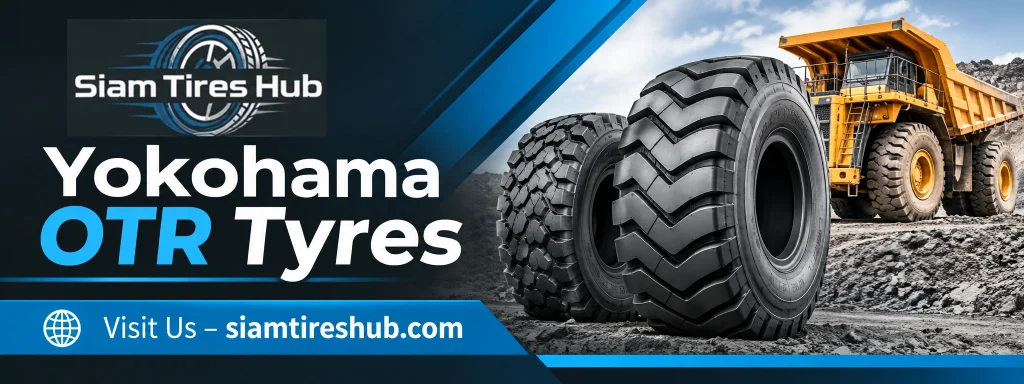
Heavy-duty operations rarely encounter predictable working conditions. A mining loader navigating loose rock, an excavator moving across uneven ground and a freight truck covering long highway distances place entirely different demands on their tyres. Yokohama OTR tyres offer a starting point for understanding how specialised tyre engineering supports demanding off-road operations, where traction, load-bearing capacity, structural strength and resistance to wear influence equipment performance. Comparing Yokohama OTR and TBR tyre applications across mining, earthmoving, construction and commercial transportation requires a closer look at the environments in which these products operate. While Off-the-Road (OTR) tyres support heavy machinery working beyond conventional roads, Truck and Bus Radial (TBR) tyres address the demands of commercial transportation, including load distribution, road stability and sustained mileage. This guide explores how tread patterns, tyre dimensions, construction methods and technical specifications work together to determine suitability across different heavy-duty applications, helping businesses make more informed tyre selection decisions. How Operating Terrain Shapes Tyre Selection A tyre’s working environment determines much more than its external appearance. Surface conditions, equipment weight, operating speed and the frequency of movement influence the type of construction and tread design required. A tyre suitable for a smooth transportation route may struggle when exposed to sharp rocks, loose soil or constantly changing construction surfaces. In mining environments, machinery frequently encounters abrasive materials, uneven ground and substantial loads. These conditions demand specialised Yokohama mining tyres capable of supporting equipment requirements while providing appropriate traction and structural protection. Earthmoving operations introduce additional challenges, including changing soil conditions, gravel surfaces and repeated turning movements. Construction sites require another approach because equipment may transition between compacted surfaces, loose aggregates and muddy working areas. Meanwhile, commercial transportation prioritises consistent road contact, load stability and predictable handling over extended distances. Selecting Yokohama heavy equipment tyres therefore begins with identifying the actual working environment rather than relying exclusively on the equipment category. Two loaders operating at different mining sites may require different tread configurations because their surface conditions, travel distances and material-handling activities are not identical. Decoding Tread Patterns for Traction and Surface Control Tread design influences how effectively a tyre interacts with the ground. Its grooves, blocks, spacing and depth contribute to traction, stability, self-cleaning characteristics and wear behaviour. For heavy-duty equipment, selecting the correct pattern is particularly important because unsuitable tread configurations can affect productivity and operating efficiency. Similarly, Yokohama TBR tyres require tread designs suited to commercial transportation demands, including road grip, handling stability and consistent wear. Different Yokohama tyre tread patterns are developed to address varying surface conditions and application requirements. Rather than assuming that a deeper tread is always better, you should evaluate the relationship between pattern design and the actual working environment. Three important considerations include: For off-road machinery, the relationship between tread depth, block arrangement and surface composition can influence performance throughout the working cycle. In comparison, TBR applications require consideration of axle position and whether the tyre will be used for steering, driving or trailer operations. Connecting Tyre Dimensions with Equipment Load Requirements Tyre size is a fundamental part of heavy-duty equipment compatibility. The correct dimensions help ensure that a tyre fits the designated wheel assembly and operates within the vehicle manufacturer’s recommended parameters. However, selecting a size involves more than matching the numbers printed on an existing tyre. Mining loaders, articulated dump trucks, graders and excavators may require substantially different tyre dimensions depending on their design, axle configuration and operating weight. Similarly, commercial trucks and buses use specific TBR dimensions suited to their wheel arrangements and transportation requirements. When comparing Yokohama industrial tyres, buyers should consider tyre width, overall diameter, rim compatibility, load index and inflation requirements alongside the equipment’s intended working conditions. Load capacity deserves particular attention. Heavy machinery may carry varying material weights throughout a working cycle, while commercial vehicles experience different load distributions depending on cargo and axle configuration. Selecting an unsuitable load rating can compromise operational suitability and tyre performance. Another important factor is the relationship between tyre dimensions and equipment clearance. Incorrect sizing may affect vehicle geometry, handling characteristics and compatibility with existing components. Comparing OTR and TBR Construction Across Heavy-Duty Operations Although OTR and TBR tyres both serve demanding applications, their construction priorities differ according to their intended operating environments. Understanding these differences helps procurement teams identify products that match machinery requirements and transportation demands. OTR tyre construction OTR tyres are designed for specialised machinery operating on challenging surfaces. Their construction must account for heavy loads, uneven terrain, repeated movement and exposure to abrasive materials. Important considerations include: TBR tyre construction TBR tyres are developed for trucks and buses operating across regional, national and long-distance transportation networks. Their construction focuses on supporting commercial vehicle loads, road contact, handling and sustained operation. Important considerations include: An OTR tyre may operate at relatively low speeds while carrying substantial loads across rough surfaces, whereas a TBR tyre generally encounters higher sustained road speeds and repeated highway or regional transportation cycles. Matching Tyre Applications with Mining, Construction and Transportation The right tyre configuration becomes easier to identify when procurement decisions are connected to specific industry activities. Each sector introduces a different combination of surface conditions, workload, operating duration and performance expectations. Reviewing Yokohama tyre specifications alongside these operational factors helps buyers identify products that match their equipment requirements. Mining operations often involve loaders, dump trucks and other specialised machinery working around rock, gravel and mineral materials. These environments require attention to traction, casing protection, load capacity and resistance to surface-related damage. Earthmoving and construction projects involve equipment such as graders, loaders and excavators. Since these machines frequently work across changing terrain, tyre selection should account for surface variability, equipment weight, manoeuvrability and repeated loading cycles. Commercial transportation operates under a different set of priorities. Trucks and buses require tyres that support road stability, load distribution, predictable handling and appropriate mileage characteristics. TBR selection should also consider axle position, route conditions and the balance between highway and regional driving. Businesses sourcing Yokohama tyres wholesale should evaluate these requirements across their